









What Happened
Scientific inquiry into climate feedback loops has increasingly clarified how interconnected processes within Earth’s climate system can amplify or dampen the effects of initial changes in atmospheric composition and surface temperature. These feedback loops—both natural and anthropogenic—play a critical role in determining the trajectory of global warming, influencing projections of future climate scenarios. Advancements in climate modeling and observational data have deepened our understanding of the mechanisms that drive these feedbacks, highlighting their complexity and variability across geographic regions and temporal scales.
Why It Matters
Understanding climate feedback loops is central to accurate climate prediction and policymaking. Feedbacks can accelerate warming beyond initial greenhouse gas forcing, or conversely, introduce stabilizing effects. This knowledge informs risk assessments, adaptation strategies, and mitigation efforts globally. Without a nuanced grasp of how feedback loops operate, climate models may underestimate or overestimate future temperature increases, sea level rise, and extreme weather frequency. As nations negotiate emissions targets and develop resilience plans, the implications of these feedback mechanisms underscore the urgency and challenge of managing climate change effectively.
Industry Context
The energy, agriculture, insurance, and infrastructure sectors are among those most directly impacted by the dynamics of climate feedback loops. In energy, the feedbacks influence demand patterns and resource availability, particularly where temperature extremes and water scarcity are involved. Agricultural productivity is sensitive to feedback-driven shifts in precipitation and soil conditions. Insurance industries grapple with the amplified risks arising from climate-induced disasters, while infrastructure planning must account for uncertainty in climate projections shaped by feedback processes. Furthermore, climate science continues to be a critical input for financial markets as they assess long-term risk related to environmental factors.
Analysis
Climate feedback loops can be broadly categorized into physical, chemical, and biological processes. Among the most studied are the ice-albedo feedback, carbon cycle feedbacks, and water vapor feedback. The ice-albedo feedback operates as melting ice reduces surface reflectivity, causing more solar absorption and further warming. Carbon cycle feedbacks involve the release or absorption of greenhouse gases by terrestrial and oceanic systems, which can either exacerbate or mitigate atmospheric CO2 concentrations. Water vapor feedback enhances warming since warmer air holds more moisture, a potent greenhouse gas, thereby intensifying the greenhouse effect.
Recent research has emphasized the nonlinearity and threshold behavior inherent in these feedbacks. For example, permafrost thaw may trigger abrupt methane releases, an event with potentially disproportionate climate impact. Similarly, changes in cloud formation patterns remain a significant source of uncertainty, as clouds can both cool by reflecting sunlight and warm by trapping heat. The interaction between feedbacks also complicates prediction; the synergy of multiple feedbacks can produce emergent behaviors not evident when considering mechanisms in isolation.
Technological progress in remote sensing, combined with improved Earth system models, is enabling more refined quantification of feedback strengths and their spatial variability. However, challenges persist due to gaps in observational data, especially in remote regions and the deep ocean, and complexities in simulating coupled human-natural systems. The evolving understanding of feedback loops necessitates continuous model refinement and interdisciplinary collaboration to capture the full spectrum of climate system responses.
What to Watch Next
Future research trajectories will likely focus on reducing uncertainties related to key feedbacks, particularly those involving permafrost carbon release, ocean circulation changes, and cloud dynamics. Monitoring technologies and data integration methods will play a pivotal role in detecting early signs of feedback activation and potential tipping points. Additionally, the integration of socio-economic factors with biophysical feedbacks in climate models will be crucial for developing adaptive policy frameworks that are responsive to evolving climate risks.
As international climate negotiations and national policies evolve, the incorporation of sophisticated feedback loop analyses will be essential for setting realistic targets and effective mitigation pathways. Stakeholders across sectors must remain attentive to emerging scientific insights to anticipate and manage the cascading effects of these self-reinforcing climate processes.
Ask AI about this story
Answers are based on this article and SN Media’s related coverage. AI can make mistakes.
Frequently asked questions
What are the main types of climate feedback loops discussed in the article?
The article categorizes climate feedback loops into physical, chemical, and biological processes, highlighting examples such as the ice-albedo feedback, carbon cycle feedbacks, and water vapor feedback.
Why is understanding climate feedback loops important for climate prediction and policymaking?
Understanding feedback loops is crucial because they can either accelerate or stabilize warming beyond initial greenhouse gas forcing, affecting the accuracy of climate models and informing risk assessments, adaptation strategies, and mitigation efforts.
What challenges remain in studying and modeling climate feedback loops?
Challenges include gaps in observational data, particularly in remote regions and the deep ocean, complexities in simulating coupled human-natural systems, and uncertainties related to feedbacks like permafrost carbon release and cloud dynamics.
How do climate feedback loops impact various economic sectors?
Feedback loops influence energy demand and resource availability, affect agricultural productivity through changes in precipitation and soil conditions, increase risks for the insurance industry due to climate disasters, and complicate infrastructure planning by introducing uncertainty in climate projections.
Continue the story
 LATEST
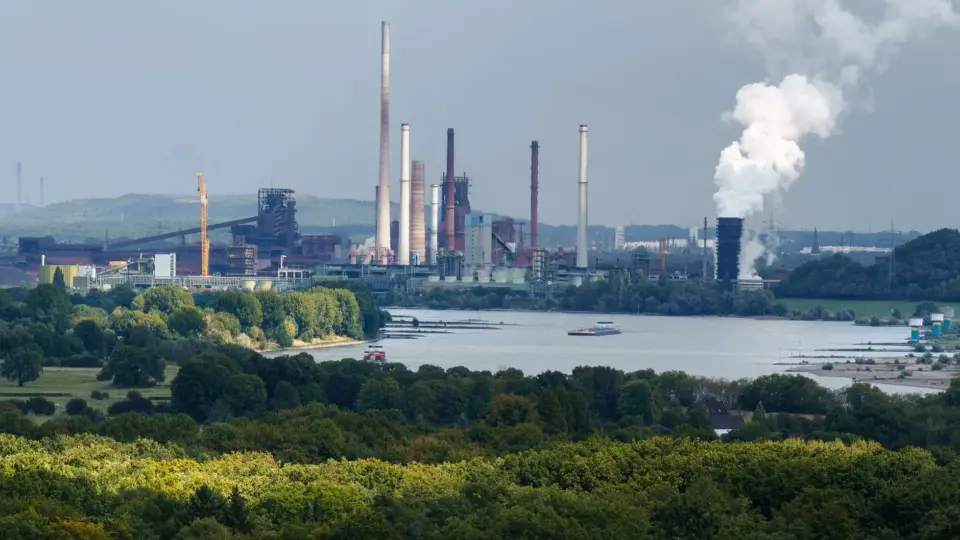
Climate Change and the Rhine: How Extreme Weather Disrupts European Supply Chains
LATEST
Climate Change and the Rhine: How Extreme Weather Disrupts European Supply Chains
- LATEST Urban Infrastructure Challenges Exposed by Flash Flooding in Tri-State Area
- LATEST How California’s Early October Heatwave Is Stressing the Power Grid
- LATEST How Rising Oil Prices Are Reshaping Global Inflation Expectations
- LATEST How Nobel Prize-Winning Decision Science is Shaping Modern Investment Strategies