








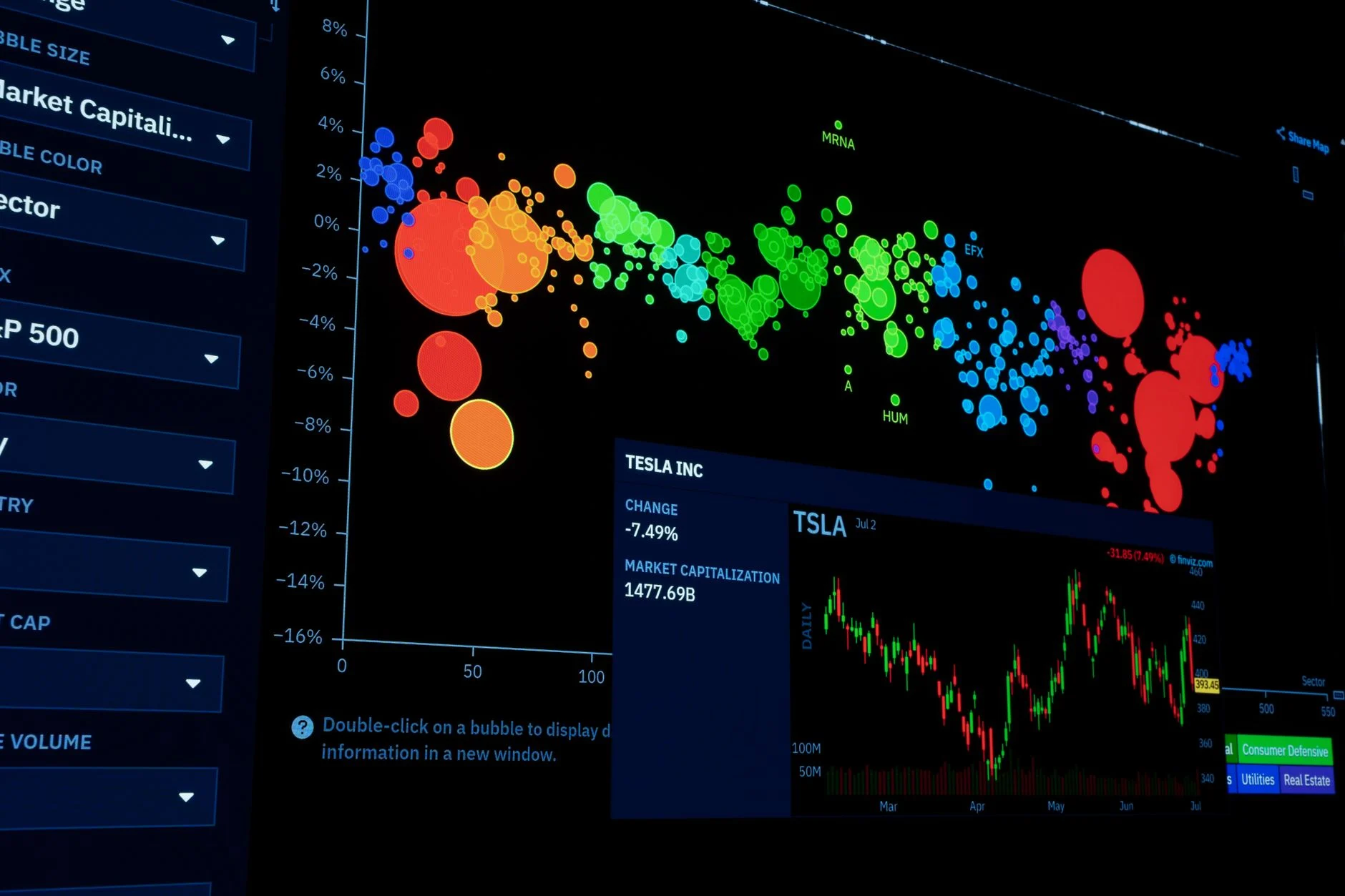
- Surges in AI sector volatility are amplifying hedge funds’ reliance on dispersion trades.
- Dispersion strategies capitalize on divergent stock movements within indexes, benefiting from AI-driven sector idiosyncrasies.
- The interplay between AI excitement and traditional market factors like oil price shifts complicates risk assessment.
- Hedge funds face evolving challenges in pricing correlation and volatility amid rapidly changing technological narratives.
How AI-Driven Volatility is Shaping Hedge Fund Dispersion Strategies
What happened
Recent months have seen a pronounced increase in market volatility linked to the technology sector, particularly driven by developments in artificial intelligence. Hedge funds have responded by intensifying their use of dispersion strategies, which seek to profit from the varying price behaviors of individual stocks relative to their broader indices. This trend coincides with heightened fluctuations in AI-related equities, which have exhibited pronounced divergences that create fertile ground for such trades. Simultaneously, external factors such as oil price volatility have added layers of complexity, influencing broader market correlations and feeding into hedge funds’ risk models.
Why it matters
Dispersion trades are sensitive to the correlation and volatility dynamics within equity baskets. The AI sector’s sharp stock price swings disrupt traditional market patterns, increasing cross-sectional volatility and thereby enhancing the payoff potential for these strategies. Understanding how AI-driven market excitement interacts with fundamental economic variables is critical for investors seeking to calibrate risk and return. The evolving behavior of correlations impacts not only hedge funds but also the broader ecosystem of derivatives pricing and portfolio construction. As AI transforms market structure, it reshapes the tools and assumptions underpinning risk management.
Industry context
Dispersion trading has long been a staple hedge fund approach, exploiting discrepancies in implied volatility between index options and constituent stock options. Traditionally, these trades hinge on the premise that individual stocks within an index will move more independently than the index’s aggregated price suggests. However, the technology sector’s rapid evolution, punctuated by AI breakthroughs, has introduced an unconventional source of volatility. Unlike cyclical industries, where macroeconomic factors dominate, AI-related stocks often react sharply to innovation milestones, regulatory shifts, and sentiment swings. Moreover, simultaneous shocks such as energy market disruptions feed into broader volatility regimes, forcing funds to recalibrate models that historically treated sector and macro risks separately.
Analysis
The mechanics of dispersion trading rely heavily on accurate estimation of correlation and volatility surfaces. AI’s impact complicates this estimation by injecting asymmetric information flows and event-driven spikes. For instance, a single breakthrough in AI capability or regulatory announcement can trigger outsized moves in a subset of tech stocks, decoupling them from peers and the overall market. This fragmentation increases cross-sectional volatility, which dispersion strategies aim to capture. However, it also raises the risk of model misspecification, as historical correlations become less predictive in the face of technology-driven idiosyncrasies.
Additionally, the confluence of AI excitement with macro factors like oil price volatility introduces non-linear effects. Energy price shifts influence input costs and inflation expectations, which in turn affect broader sectors including technology. Hedge funds must therefore integrate multi-dimensional risk factors when structuring dispersion trades, balancing sector-specific volatility with systemic market shocks. This integration demands sophisticated quantitative tools and a nuanced understanding of how emerging technologies reshape market dynamics and investor behavior.
What to watch next
Market participants should monitor the persistence of AI-driven volatility and its interaction with macroeconomic variables such as commodities and interest rates. Regulatory developments around AI deployment and associated ethical considerations could trigger episodic shocks, further disrupting correlation patterns. Additionally, shifts in investor sentiment—whether fueled by technological optimism or skepticism—will influence dispersion trade viability. The evolution of volatility surfaces in AI-intensive sectors and their integration into broader market models will be a critical gauge of hedge funds’ ability to navigate this new landscape. Ultimately, the capacity to adapt risk frameworks to an era of rapid technological innovation and complex interdependencies will determine the success of dispersion strategies going forward.
Ask AI about this story
Answers are based on this article and SN Media’s related coverage. AI can make mistakes.
Frequently asked questions
How has AI-driven volatility affected hedge fund dispersion strategies?
AI-driven volatility has increased cross-sectional stock price divergences within the technology sector, enhancing the payoff potential for dispersion trades that capitalize on these differences. However, it also complicates risk assessment by disrupting traditional correlation and volatility patterns.
What challenges do hedge funds face when pricing risk amid AI sector volatility?
Hedge funds struggle with accurately estimating correlations and volatility surfaces because AI-related stocks can experience event-driven spikes and asymmetric information flows that decouple them from peers and the broader market. Additionally, simultaneous macro factors like oil price volatility introduce non-linear effects that complicate risk models.
Why is the interaction between AI excitement and macroeconomic factors important for dispersion trades?
The interplay affects broader market correlations and volatility regimes, requiring hedge funds to integrate multi-dimensional risk factors such as energy price shifts and inflation expectations alongside sector-specific volatility. This integration is necessary to balance systemic market shocks with technology-driven idiosyncrasies in dispersion strategies.
What future developments should investors watch regarding AI-driven market volatility?
Investors should monitor the persistence of AI-driven volatility, regulatory changes around AI, shifts in investor sentiment, and how volatility surfaces in AI-intensive sectors evolve. These factors will influence the viability of dispersion trades and hedge funds' ability to adapt risk frameworks to ongoing technological innovation.
Continue the story
 LATEST
Global Pension Funds Navigate AI-Driven Market Volatility by Reducing US Equity Exposure
LATEST
Global Pension Funds Navigate AI-Driven Market Volatility by Reducing US Equity Exposure