


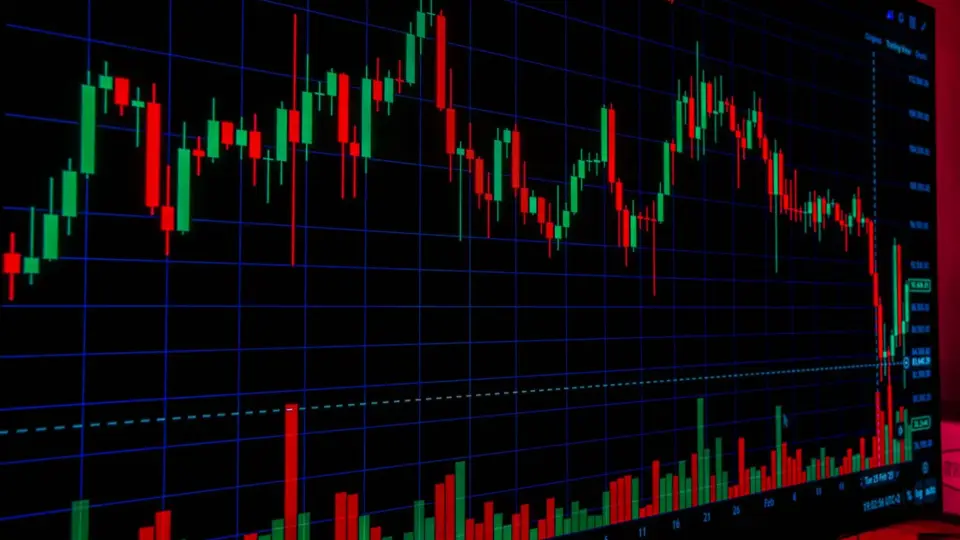




- Option traders are pricing in increased volatility linked to recent AI sector disruptions.
- Rising inflation and tightening monetary policy compound uncertainty in US equity markets.
- The VIX index is signaling a potential structural shift in market risk perception.
- Volatility expectations are influencing portfolio hedging and risk management strategies.
How AI Uncertainty is Reshaping Volatility Expectations in US Markets
What happened
In recent weeks, US financial markets have exhibited a notable rise in volatility expectations, particularly within the options market. This surge correlates with disruptions in the artificial intelligence (AI) sector, where abrupt shifts in company valuations and earnings forecasts have unsettled investors. Concurrently, persistent inflationary pressures and signals from the Federal Reserve regarding further interest rate hikes have intensified uncertainty. These dynamics have led option traders to price in a higher probability of large market moves, as reflected in elevated levels of the CBOE Volatility Index (VIX).
Why it matters
The volatility gauge, often dubbed the “fear index,” serves as a barometer for market risk sentiment. When traders anticipate heightened turbulence, they demand greater premiums for options, directly impacting hedging costs and capital allocation decisions. This phenomenon is not merely a short-term reaction; it suggests a recalibration of risk frameworks amid evolving technological and macroeconomic landscapes. The blending of sector-specific shocks with broader economic stressors complicates risk assessment, potentially leading to more conservative positioning or innovative hedging approaches by institutional investors. Such shifts bear consequences for liquidity, market stability, and ultimately the cost of capital for corporations.
Industry context
AI-related stocks have experienced significant swings due to mixed earnings results, regulatory concerns, and competitive pressures, reflecting the sector’s rapid maturation and speculative undercurrents. Meanwhile, inflation remains stubbornly above central bank targets, prompting a series of aggressive monetary tightening cycles. Historically, periods combining technological disruption with tightening financial conditions have elevated volatility, but the current environment is distinct in its global interconnectedness and the prominence of AI as a transformative force. Option markets, which provide a direct measure of investor expectations for future price variability, have become focal points for gauging these combined pressures.
Analysis
The interaction between AI sector volatility and macroeconomic tightening illustrates complex feedback loops in market behavior. Disruptions in AI firms affect broad indices due to their substantial weighting and investor sentiment spillovers. As option market participants recalibrate their volatility forecasts, they influence not only derivative pricing but also underlying asset demand through hedging and speculative flows. This dynamic can exacerbate price swings, creating a self-reinforcing cycle. Moreover, the cost of volatility hedges rising implies higher expenses for portfolio insurance, which may deter risk-taking or encourage shifts toward alternative risk mitigation tools. Market participants face a trade-off: balancing the desire to capitalize on AI-driven growth against the rising premiums required to manage amplified uncertainty.
What to watch next
Key indicators to monitor include the trajectory of the VIX relative to realized volatility, earnings reports from major AI companies, and inflation data releases. Additionally, central bank communications will remain critical in shaping expectations around monetary policy and its impact on risk assets. The evolution of regulatory oversight on AI technologies and data privacy could further influence sector stability. Finally, changes in investor behavior—whether toward increased hedging, reduction in leverage, or diversification away from tech-heavy portfolios—will illuminate how these volatility expectations translate into market structure shifts. Observing these factors will be essential to understanding whether current elevated volatility is transient or indicative of a new regime in US market risk dynamics.
Ask AI about this story
Answers are based on this article and SN Media’s related coverage. AI can make mistakes.
Frequently asked questions
What factors are driving the recent rise in volatility expectations in US markets?
The rise in volatility expectations is driven by disruptions in the AI sector, including shifts in company valuations and earnings forecasts, combined with persistent inflation and signals of further interest rate hikes from the Federal Reserve.
How is increased volatility affecting market participants and risk management strategies?
Higher volatility leads option traders to demand greater premiums, increasing hedging costs and influencing portfolio insurance decisions, which may result in more conservative positioning or the adoption of innovative risk mitigation approaches by institutional investors.
What role does the AI sector play in the current market volatility environment?
AI-related stocks have experienced significant swings due to mixed earnings, regulatory concerns, and competitive pressures, affecting broad market indices and investor sentiment, thereby contributing to elevated volatility expectations in conjunction with macroeconomic tightening.
What indicators should be monitored to understand future volatility trends in US markets?
Key indicators include the VIX relative to realized volatility, earnings reports from major AI companies, inflation data, central bank communications on monetary policy, regulatory developments in AI, and changes in investor behavior regarding hedging and portfolio diversification.
Continue the story
 BACKGROUND · How we got here
AI’s Global Economic Impact: Beyond US and China
BACKGROUND · How we got here
AI’s Global Economic Impact: Beyond US and China
- BACKGROUND · How we got here How US Treasuries Became the Go-To Safe Haven Amid Tech Stock Turmoil
- BACKGROUND · How we got here Tech Stocks Surge: Assessing Investor Risk Amid AI-Driven Rally
- BACKGROUND · How we got here How Wall Street’s Strong Quarter Could Reset Bank Stocks Amid AI Concerns
- BACKGROUND · How we got here How Michigan’s Public-Private Partnerships Are Shaping the Future of American Manufacturing